
Drainage Systems That Prevent Foundation Erosion
Gutter Installation in Roanoke for properties undergoing roof replacement or new roof installation
Gutters installed during roof replacement projects integrate seamlessly with new roofing systems because flashing, drip edges, and fascia boards are already exposed and accessible during the installation process. 220 Roofing & Restoration offers gutter installation exclusively as an add-on service when replacing or installing roofs, which allows the gutter system to be fitted precisely to the roofline and secured to fascia boards that have been inspected and reinforced as needed during roofing work. This coordinated approach eliminates the need for separate contractor visits and ensures that water management begins at the roof edge and continues through properly sloped gutter runs to downspouts positioned away from foundation walls.
Seamless aluminum gutters are fabricated on-site to exact measurements, which eliminates the leak-prone joints found in sectional gutter systems and creates continuous channels that handle the high water volumes generated during summer thunderstorms and spring runoff in Roanoke. Gutter hangers are spaced closer together than standard installations to support the weight of accumulated water and prevent sagging during heavy rain, and downspouts are sized to match gutter capacity so water exits the system without overflowing at the elbows or joints.
Discuss gutter upgrades during your roof replacement consultation to coordinate installation and improve drainage performance across the entire property.
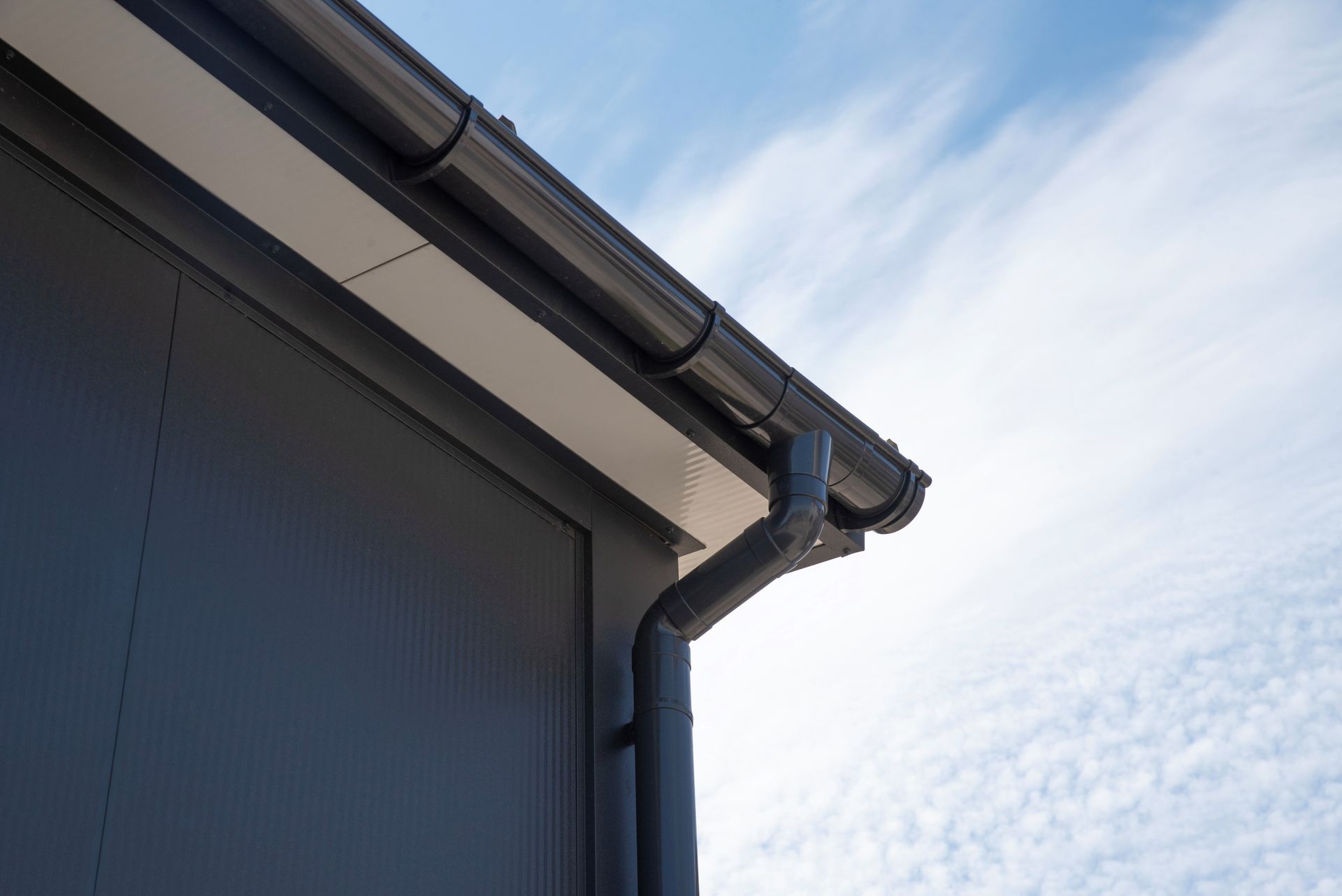
How Gutter Installation Addresses Water Damage
Gutter systems prevent roof runoff from cascading directly onto soil adjacent to foundation walls, where repeated saturation causes erosion, settling, and moisture infiltration into basements or crawl spaces. Without gutters, water sheets off the roof edge and digs troughs along the foundation perimeter, washing away grading that was designed to slope away from the structure. Properly installed gutters capture this runoff and channel it through downspouts that discharge water at least six feet from the foundation, where it can be absorbed into the soil without compromising structural stability or creating drainage problems near the building.
After installation, you'll notice that soil along the foundation remains intact during rainstorms instead of eroding into muddy channels, and water no longer splashes onto siding or windows during heavy downpours. Landscaping beds near the house stay in place because they're no longer exposed to concentrated water flow from the roof edge, and basement humidity levels drop because groundwater isn't pooling against foundation walls. Gutters also protect fascia boards and roof edges from rot by preventing water from running behind the roofline and soaking into wood trim during storms.
Gutter installation includes optional gutter guards that prevent leaves and debris from clogging the system while still allowing water to flow freely through the channels. Guards are particularly useful for properties with mature trees that shed leaves, pine needles, or seed pods throughout the year, and they reduce the frequency of manual gutter cleaning required to maintain proper drainage.
Common Questions About This Service
Homeowners considering gutter installation during roof replacement projects ask practical questions about system design, material options, and long-term performance.
Why is gutter installation only available during roof replacement?
Gutter installation is coordinated with roof replacement because the fascia boards and drip edges that support the gutter system are fully accessible during roofing work, allowing proper alignment and secure attachment without disturbing an existing roof or requiring additional scaffolding and labor visits.
What size gutters are needed for properties in Roanoke?
Most residential properties require five-inch gutters with standard downspouts, though larger homes with steep roof pitches or properties with significant tree coverage may benefit from six-inch gutters that handle higher water volumes during intense storms common in Southwest Virginia.
How are downspouts positioned to prevent foundation problems?
Downspouts are placed at corners and intervals that prevent gutter runs from exceeding recommended lengths, and extensions direct water at least six feet away from foundation walls to discharge runoff into areas where it can absorb into the soil without pooling near the structure.
What maintenance do seamless gutters require after installation?
Seamless gutters require periodic cleaning to remove accumulated debris, and inspections should check for proper slope, secure hangers, and clear downspouts to ensure water flows freely through the system without overflowing during heavy rain.
When should gutter guards be added to the installation?
Gutter guards should be included during installation if the property has overhanging trees that drop leaves, needles, or seed pods into the gutter system, as guards prevent clogs while allowing rainwater to enter the channels and flow toward downspouts.
220 Roofing & Restoration fabricates seamless gutters on-site during roof replacement projects to ensure precise measurements and coordinated installation timelines. Request a roof replacement estimate to explore gutter system options and upgrades suited to your property's drainage needs.